目錄大綱
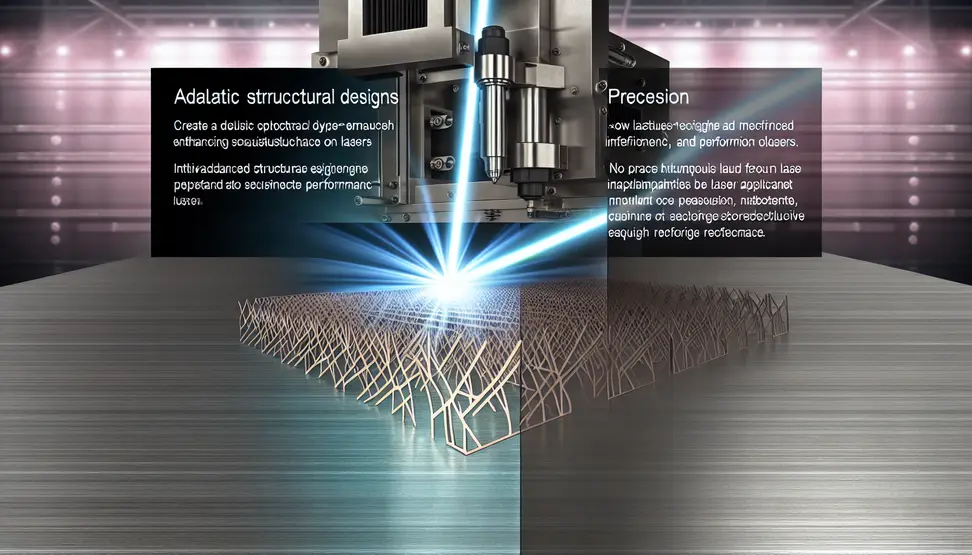
Achieving superior precision in laser marking isn’t just about the laser itself—it’s about the foundational design principles underpinning the entire system. From cutting-edge 3D scanning to robust machine components, structural innovations have redefined what’s achievable in laser precision. In this article, you’ll discover the remarkable synergy between technologies like 3D modeling, facet passivation, optics engineering, and machine design—and how they push the boundaries of accuracy and efficiency in industries committed to excellence.
3D Laser Scanning in Precision Design

For precision laser systems, reliable accuracy starts with meticulous data collection—and that’s where 3D laser scanning excels. By transforming physical environments into precise digital replicas, 3D laser scanning has become a linchpin in structural design workflows.
This technology uses high-frequency laser pulses to create a dense point cloud of spatial data, capturing surface details down to millimeter-level deviations. Unlike manual measurement methods prone to error, 3D scanning ensures high-fidelity data—even in complex environments like industrial facilities and retrofitted construction sites. The outcome? Virtual models that replicate real-world conditions to perfection.
These models serve as the blueprint within CAD or BIM systems, making them critical for tasks such as clash detection, laser system alignment, and part development with exact fitment. By bridging virtual designs with as-built realities, you eliminate costly alignment errors and calibration issues.
Industries from historical restoration to modern manufacturing benefit tremendously here. In historical projects, 3D scans preserve architectural accuracy, while in retrofits, teams can synchronize workflows via a shared dataset, reducing unexpected delays and missteps.
Ready to explore more about laser cutting precision? Check out this laser cutting guide to see how it’s shaping structural workflows even further. By starting with impeccable structural scans, laser marking technologies meet—and often exceed—the demands of today’s high-precision industries.
Enhancing Laser Durability with Facet Passivation
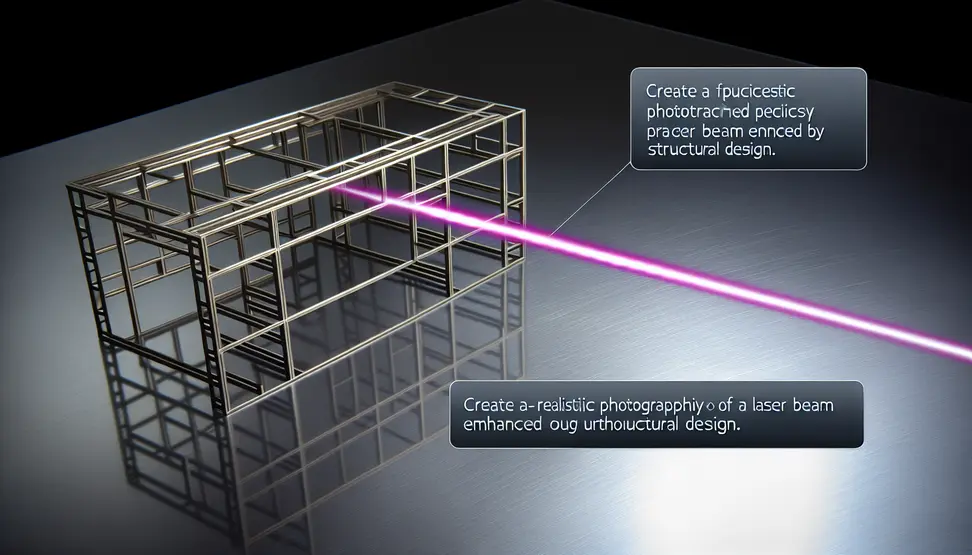
Modern lasers owe much of their durability and precision to innovations in facet passivation techniques, which are pivotal in protecting high-stress edge-emitting laser diodes. These small but mighty lasers—critical for industries ranging from telecommunications to material fabrication—are most vulnerable at their facets, the regions subject to intense optical power. Here, issues like catastrophic optical mirror damage (COMD) can mean total failure. Luckily, structural design and passivation have turned this weakness into a strength.
Crystalline oxide-based passivation has emerged as a game changer. Unlike traditional coatings rife with defects, crystalline structures minimize recombination centers, resulting in higher reliability and longer lifespans. Controlled oxidation methods further enhance these coatings, stabilizing facets at atomic precision to withstand even extreme operational conditions. The payoff? Improved efficiency and significantly reduced failure risks in high-power settings.
Complementing these breakthroughs are structural enhancements like photonic crystal gratings to stabilize emission modes and extended optical cavities to improve photon lifetimes. Together, these innovations create a deeply resilient laser system primed for top-tier performance.
Beyond reliability, automated passivation workflows make high-volume manufacturing scalable and consistent. Industries like advanced material processing and telecommunications now leverage these techniques to meet ever-increasing demands for powerful, efficient lasers.
For ideas on how steel laser cutting benefits from these leaps in structural integrity, dive into our steel laser cutting resources.
Precision Optics: Enhancing Laser Accuracy by Design
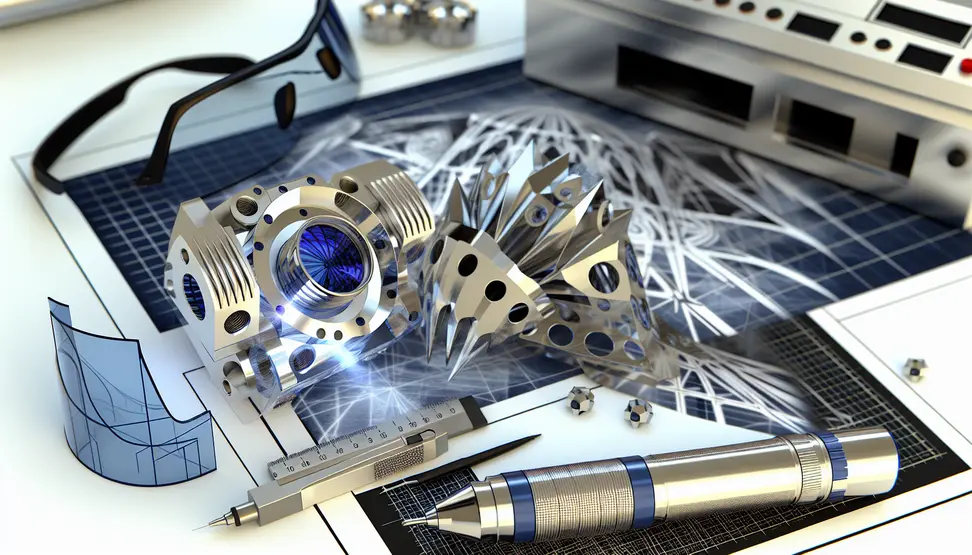
Imagine this: a high-power laser system operating under extreme thermal, mechanical, and environmental pressures—and still delivering flawless results. Precision optics engineering makes this possible by solving the challenges of such high-intensity applications using innovative structural designs.
From next-gen nuclear fusion reactors to advanced industrial tools, high-power lasers now demand optical components built with resilience in mind. For example, future laser-driven power plants plan to employ over 7,000 optical elements, each requiring unparalleled thermal stability and mechanical durability. Meeting these stringent demands is no small feat but has been made achievable through advancements in optical manufacturing processes.
World-class institutions like Fraunhofer Institute have developed techniques for crafting precise flat and freeform optical geometries. Innovations in fabrication, combined with enhanced material properties, enable ultra-accurate laser systems with superior beam shapes, tighter tolerances, and long-term reliability.
But these advancements go beyond research labs. Precision optics now enhance metrology and manufacturing by boosting processing speeds while maintaining unmatched material quality. Inline systems prevent material waste and bolster energy efficiency, creating more sustainable workflows.
Looking to dive deeper into how laser systems transform material processing? Learn more about laser cutting applications.
Structural Rigidity & Precision: Unlocking Laser Potential
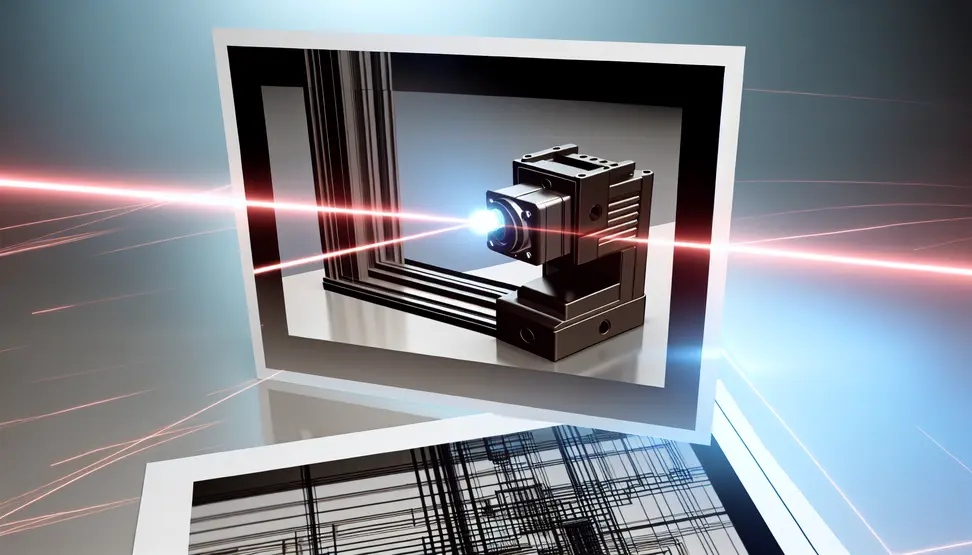
The machine structure itself is just as critical as the laser for achieving next-level accuracy. Structural rigidness ensures stability under pressure, allowing machines to execute flawlessly—even in demanding workflows.
The Backbone of Precision: High-Stiffness Frames
Rugged frames made with high-stiffness materials like granite composites are the gold standard for minimizing vibrations or mechanical flex that could otherwise throw off laser alignment. Whether it’s fast-paced production or precision cutting, robust construction ensures lasers remain consistently accurate.
Feedback and Inspection: A Modern Integration
Real-time feedback mechanisms take this precision further. Technologies like laser triangulation enable systems to detect and correct deviations instantly, while built-in surface inspections isolate flaws, maintaining peak quality throughout operations.
The Micron-Level Difference: Precision Motion Control
Reinforcing structural stability are motion-control upgrades, from linear guides to backlash-free ball screws. These ensure sub-micron precision for cutting-edge applications like fiber laser cutting, where tolerances are razor-thin—think under 80 microns.
These structural innovations elevate laser systems across a spectrum of industries, from sheet metal fabrication to intricate biomedical solutions. The result? Enhanced accuracy, reduced waste, and unmatched performance.
Final Thoughts
The modern laser industry thrives on precision—and structural design is its bedrock. By linking advanced technologies like 3D scanning, durable passivation, precise optics, and solid machine frameworks, today’s industries can unlock unprecedented levels of output quality and operational efficiency.
No matter your application, an expertly designed laser marking system makes all the difference. Reach out to us to discover these technologies and achieve superior precision in your work. Together, we’ll redefine what’s possible in high-precision manufacturing.
Learn more: https://en.fiberglass-tubes.com/contact-us/
About Us
Baixiang originated from office system furniture and continues to invest in state-of-the-art machinery, pushing the boundaries of manufacturing automation.